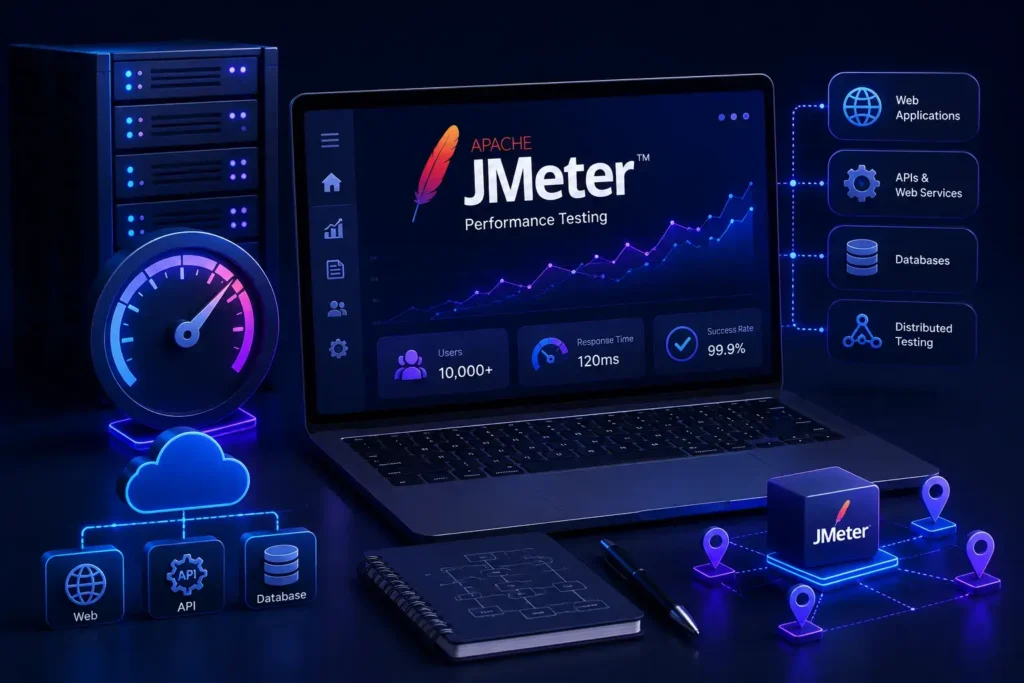

In today’s digital-first world, users expect applications to respond instantly regardless of traffic volume. A slow or unstable application can lead to revenue loss, customer dissatisfaction, and damage to brand reputation. This is where performance testing becomes essential.
Performance testing evaluates how an application behaves under various workloads. It helps teams understand response times, throughput, scalability, and system stability before real users encounter problems.
Why Performance Testing Matters
Without proper testing, applications may perform well during development but fail when exposed to production traffic. Performance testing helps organizations:
- Identify bottlenecks before release
- Validate system scalability
- Improve user experience
- Reduce infrastructure costs
- Minimize production risks
Types of Performance Testing
Load Testing
Measures application behavior under expected user loads.
Stress Testing
Determines the application’s breaking point by pushing beyond normal capacity.
Endurance Testing
Evaluates long-term stability and identifies memory leaks.
Scalability Testing
Assesses how effectively the system grows with increasing user demand.
The Business Impact
A proactive performance testing strategy ensures applications remain reliable during peak traffic periods, product launches, and business-critical events. Organizations that invest in performance engineering gain higher customer satisfaction and stronger operational confidence.
Conclusion
Performance testing is no longer optional. It is a critical component of modern software delivery that helps organizations launch with confidence and maintain exceptional user experiences.